
I have a student who started with me in privates a few weeks back.
Good student. Pays attention. Asks the right questions. He’d been working one-on-one, making real progress, and I told him it was time to come to a group class. He agreed. He showed up.
He told me afterward that walking in was the hard part.
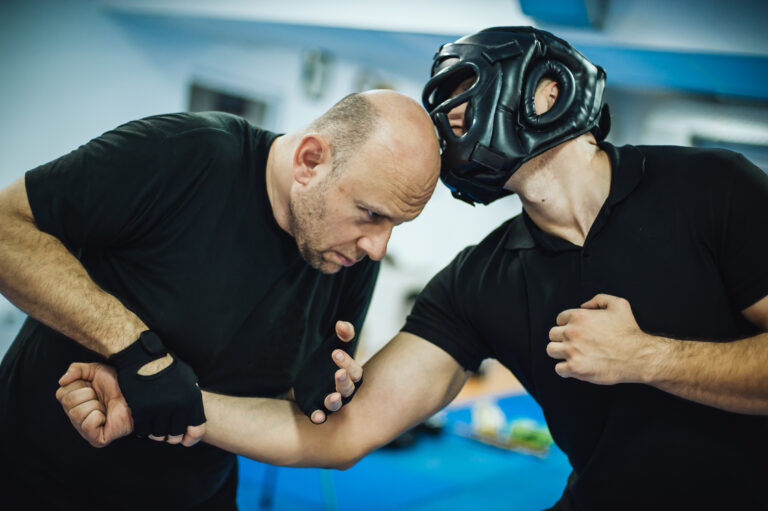
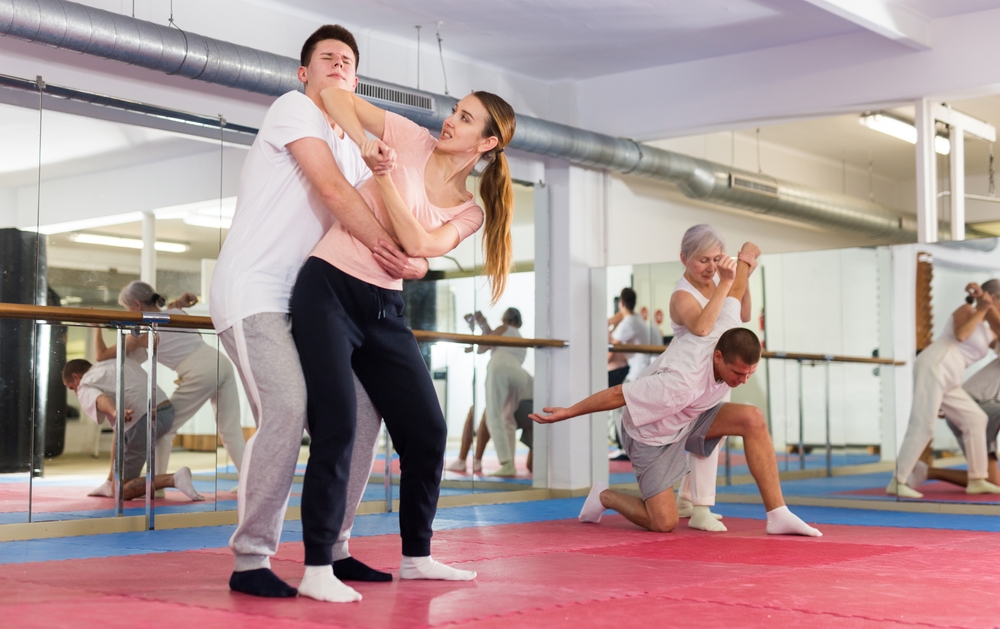
Not the workout. Not looking foolish in front of anybody. It was the moment he stepped into the room and looked around — a dozen people he’d never met, all different sizes, some of them considerably bigger than him — and understood that those were the people who would be working on him. Putting hands on him. Grabbing him, turning him, pushing and pulling him.
He said it was a bit intimidating.
The class went well. He worked hard, he got a lot out of it, and he’ll be back. But I keep coming back to that moment in the doorway, because he isn’t unusual. He’s just honest.
Most people walk into a self-defense class expecting to learn something. Techniques. Answers. A response to the wrist grab, the choke, the guy who won’t take a step back. What they don’t expect is a stranger’s hands on them.
That’s the part nobody puts in the brochure. It’s the part that keeps people in the parking lot with their phone out, telling themselves they’ll sign up next session. In twenty-five years of teaching, I’ve seen it stop more capable adults than any concern about age, fitness, or coordination ever has.
And there’s a real contradiction underneath it. Self-defense is sold as empowerment. Control. Taking back your footing in a moment when everything else has been taken from you. That framing isn’t wrong — it’s why I do this work. But look at what the training actually requires. To learn to escape a grab, someone has to grab you. To learn to defend a choke, someone has to put their hands on your neck. There is no version of this where you learn to survive contact without experiencing contact.
The promise is control. The price of admission is temporarily giving some up. Pretending otherwise doesn’t help anybody.
It lands hard because we spend our adult lives inside an unspoken agreement about personal space. Nobody touches us without permission. A handshake. A hug from someone we know. For most people, most weeks, that’s the entire list.
Step onto the mat and that agreement is suspended on purpose.
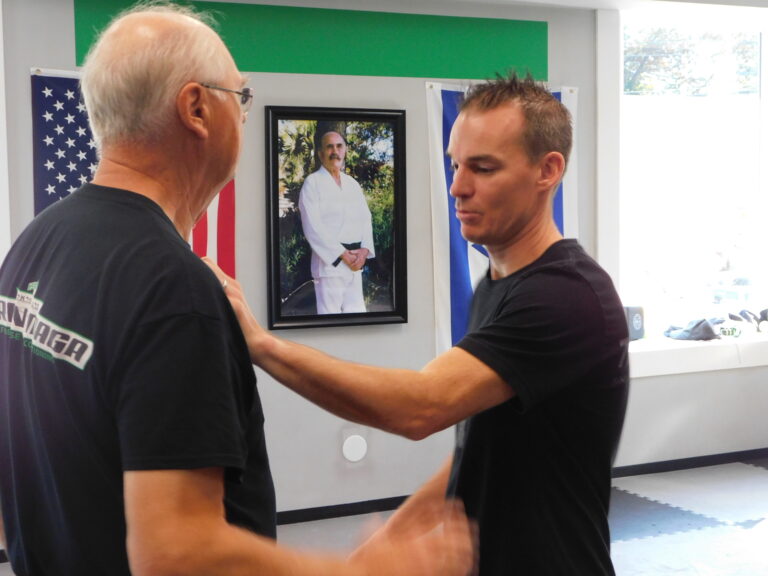
Someone you met eleven minutes ago is holding your forearm. Your heart rate is up. Your face is warm. Some part of your brain is running a fast, wordless calculation about whether you’re safe, and it does not care that the answer is yes.
That reaction isn’t weakness. It isn’t a sign you’re not cut out for this. It’s your nervous system doing the job it was built to do — flagging an unusual contact event and demanding your attention. The equipment is working. The problem is you can’t run a defense while that alarm is the loudest thing in the room.
This is where the freeze lives, and most people have the freeze wrong. They picture it as a physical thing. Muscles locking. Legs refusing to move. It isn’t. The freeze happens in the mind, and it happens fast.
Here’s the mechanism. Something happens to you, and your brain goes looking for a match. It runs a search against everything you’ve ever experienced, asking one question: *have I been here before?* When it finds something, you act. That’s what recognition is, and it’s most of what we call instinct. When it finds nothing, it stalls. It searches again. It searches a third time. And in those seconds you are not deciding badly — you are not deciding at all. You are standing there while a system that has never encountered this input tries to find a file that doesn’t exist.
That’s the freeze. It isn’t cowardice. It’s a query returning nothing.
So ask the question honestly. If the first time a stranger’s hands are on you with real intent is the first time a stranger’s hands have *ever* been on you — what exactly is your brain supposed to match that against?
Nothing. And it will search anyway. That’s the moment your life gets decided by a lookup failure.
Training is how you write the file. Every grab you take in class, every partner you don’t know, every rep that ends safely, goes into that database. It doesn’t have to be identical to what happens later. It just has to be close enough that the search comes back with *something*.
We don’t jump straight there, obviously. It’s graduated — light before heavy, static before dynamic, announced before surprising, and stop always means stop. The intensity climbs, but it climbs behind you, not in front of you. Nobody’s first day is a full-resistance scenario, and it shouldn’t be. But the direction of travel is always the same: toward contact, not around it.
Which brings me back to my student in the doorway. He felt something real standing there. He sized up a room full of strangers, registered that some of them were bigger than him, and his system flagged it. He was right to feel it. He wasn’t imagining anything.
But look at where he felt it.
He felt it in a room with mats on the floor. With an instructor watching. With rules. With partners who would let go the second he said the word. With a door about two steps behind him. He got the tight chest and the quiet impulse to be somewhere else — and then he got to experience all of it *resolving*. He worked with those bigger people. Nothing bad happened. He walked out knowing he could do it, because he had just done it. That’s the whole transaction. He paid for that lesson with about ninety uncomfortable seconds in a doorway.
The alternative isn’t avoiding the anxiety. Nobody gets to avoid it. The alternative is meeting it for the first time in a parking garage, from someone who is not going to let go when you ask, with no instructor, no rules, and no door.
Same alarm. Same racing heart. Same tight chest. Completely different consequences for freezing.
You will feel this either way. The only thing you get to choose is where, when, and who’s holding you when it happens.
Somebody who has been grabbed four hundred times in a gym has a different relationship with being grabbed than somebody who hasn’t. Not fearless — that was never the goal, and anyone selling fearless is selling something else. But their alarm goes off at a lower volume. Their hands still work. Their breathing is available to them. The search comes back fast, because there’s something in there to find.
They get three-quarters of a second of clear thought they would not otherwise have had. In a real encounter, three-quarters of a second is an enormous amount of time.
That gap — between the contact and the freeze — is the product. The technique just fills it.
So if you’re still sitting in the parking lot: you’re not being ridiculous, and you’re not the first. My student stood in that doorway a few weeks ago and did it anyway.
Come do the uncomfortable part on purpose, with people who will stop the moment you ask. Everything you actually came here to learn is on the other side of it.