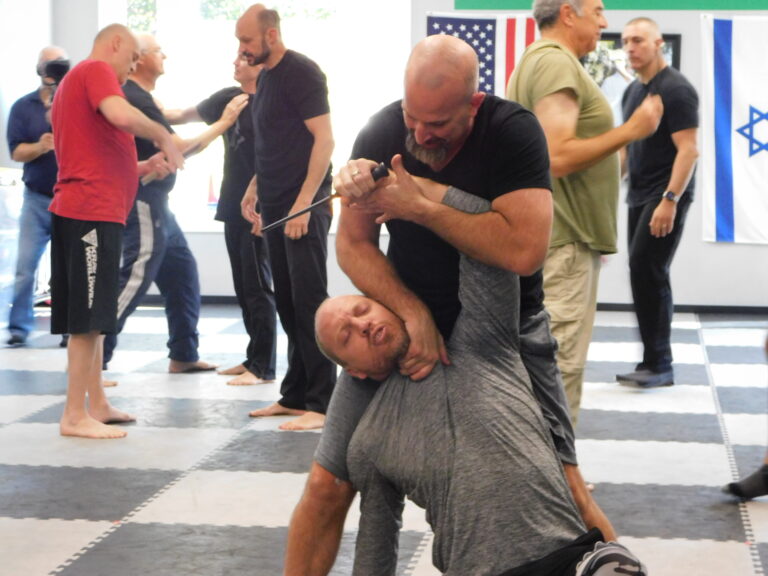

A student came to me with a question that had been bothering him for days.
He was out with his wife when he watched a security guard trying to subdue a man who was trying to get away. The man was swinging a skateboard to keep the guard off him.
My student is trained. He wasn’t frozen. He just didn’t know what the right move was.
I told him he’d already made it.
Here’s the part people miss. He didn’t walk into that lot alone. He walked in with his wife. The moment he steps into that struggle, she’s standing unattended in an environment that has already shown what it is. He doesn’t know if the man came with friends. He doesn’t know who else is armed. A skateboard fight becomes a gunfight in about two seconds, and nobody warns you first.
But set his wife aside, because this next part applies even if you’re standing there alone.
Your own body is on the table.
A skateboard is five pounds of maple on steel trucks, swung at the end of a long lever. That’s a club, and it doesn’t care about your belt rank. One clean shot to the head and you’re unconscious before you land. One to the knee and you’ve got a surgery, a year of rehab, and a joint that never quite works again. Most serious injuries in street fights don’t come from the strike — they come from the concrete. You can win the exchange and still lose the fall.
Men walk into these things assuming the worst case is losing. Losing isn’t the worst case. Brain injury is. A spinal cord injury is. A blade you never saw is. Death is on that list, and it belongs there.
Everything you’re doing with your life — earning, raising kids, caring for a parent — runs through a body that works. And you’d be wagering it on a fight you had no claim to.
The guard is on the clock. He has a radio, a company behind him, an incident report, insurance. You have none of that.
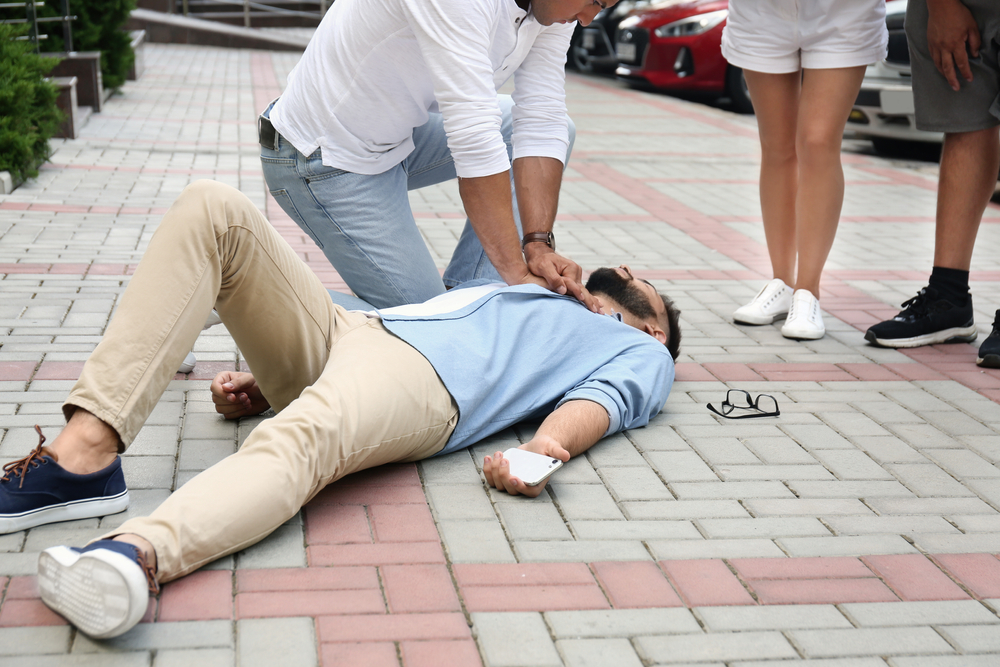
Two things worth knowing, and I teach self-defense, not law. “Good Samaritan” protections mostly cover rendering medical aid — first aid, CPR, a defibrillator. They don’t cover tackling someone. And most people assume they’re legally required to help a stranger. Generally, they aren’t. The guard has a job. You don’t.
Helping was never a binary. Fight or do nothing is a false choice.
Get your people out first. Create distance and call it in — a description, a plate, a direction of travel does more real good than most physical interventions ever will. Be a witness. Render aid once it’s over, because that’s where Good Samaritan protection actually lives.
Save your hands for the narrow case: you’re certain who the aggressor is, the harm is imminent and severe, your people are safe, and no better option exists. Four conditions. They rarely all line up.
My student wanted to know the right answer. He assessed, he prioritized correctly, and he and his wife went home intact.
Twenty-five years of teaching this, and the measure of a good outcome was never that I won.
It’s that everyone I’m responsible for — including me — is safe.